
I approach every project the same way: by stepping away from the how and focusing first on what we’re actually trying to accomplish, and why.
Before design, before platforms, before solutions, I work to build a shared understanding of the business, the audiences, and the decisions the website needs to support.
I’ve found that disconnecting from solutioning early is the most effective way to see a problem clearly and without bias.
This process is proven, repeatable, and intentionally practical. It’s designed to create clarity first, so everything that follows is easier, faster, and more aligned.

Every project begins with the same foundational work.
The goal here is simple: establish a clear, unbiased understanding of what success looks like and who the website is truly for.
This phase typically includes:
A simple, open-ended stakeholder survey
Follow-up stakeholder interviews to dive deeper
Competitive analysis to understand the broader landscape
Baseline analytics review to ground decisions in reality
The stakeholder survey and interviews focus on questions like:
What do you want your website to accomplish?
How would you prioritize conversion points?
What’s working well today and where are you hoping to improve?
Who are your primary, secondary, and tertiary audiences?
What does success look like for each of them?
At this stage, I’m intentionally not solving anything. I’m listening, synthesizing, and identifying patterns.
Once I have a clear lay of the land, I distill everything into a shared vision.
This takes the form of:
A project overview paragraph that clearly articulates what we’re doing and why
A single-sentence project statement that acts as a decision-making filter throughout the work
I read this back to the team to confirm alignment:
If we had to explain this project in one paragraph, or one sentence, what is it really about?
This step is critical. It ensures everyone is solving the same problem and gives us a neutral reference point when tradeoffs arise later.

Next, we define and rank website priorities.
These priorities are not a wish list, they’re a decision-making tool. They help teams evaluate tradeoffs, resolve debates, and stay focused when constraints appear.
Priorities might include things like:
Platform upgrades or migrations
Supporting new or expanding audiences
Fixing broken or confusing user flows
Improving credibility and brand trust
Creating audience-specific experiences
The key is order. When everything feels important, nothing is.
Clear prioritization allows the work to stay grounded in what matters most.
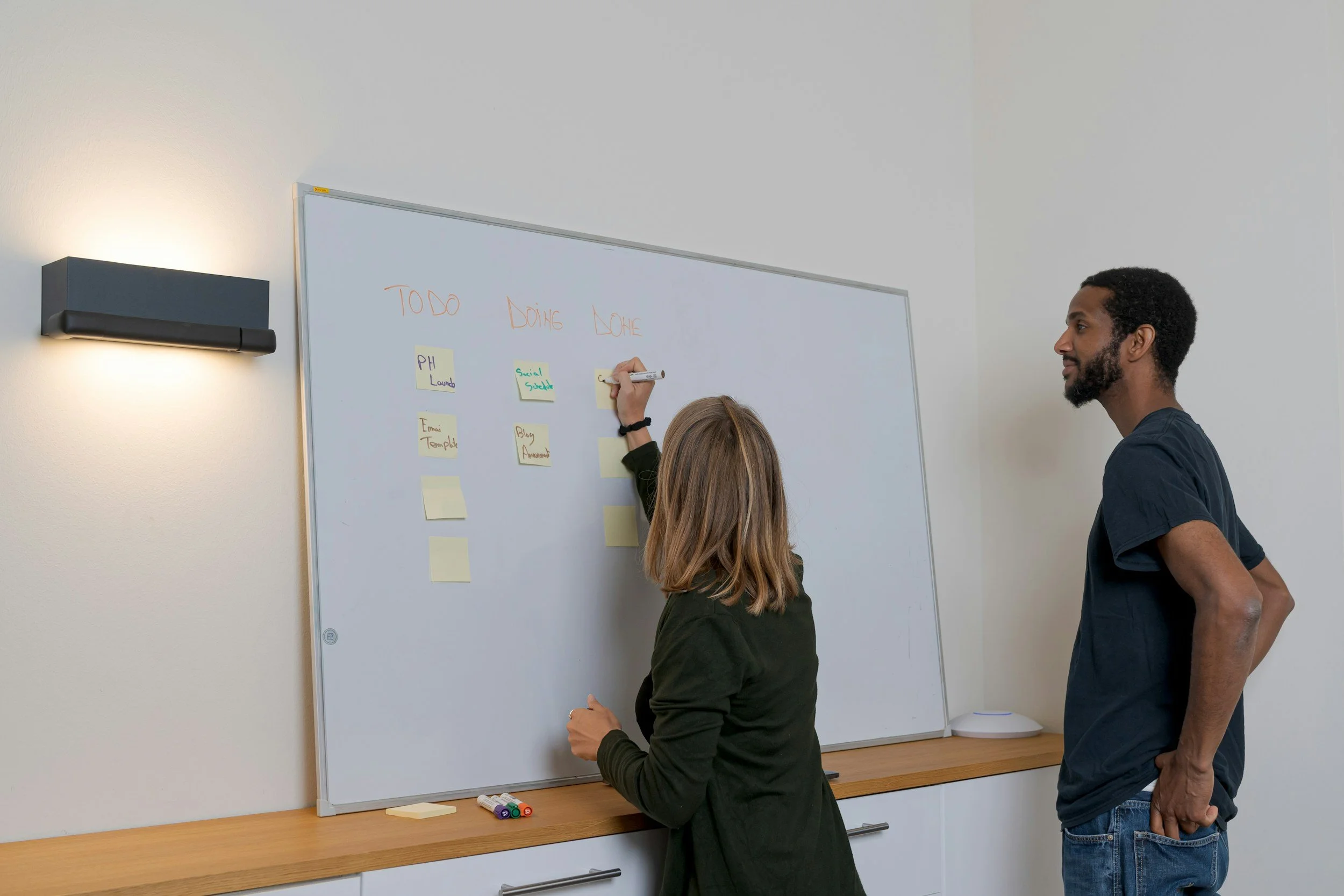
Moving along to audience definition: shifting from understanding to strategy.
I personally prefer audience archetypes over traditional personas. Archetypes are simpler, more practical, and less likely to get lost as work moves across teams. At this stage we answer:
01
Who does the website serve?
02
What are they trying to accomplish?
03
What does success look like for each audience?
This usually starts at a parent level (for example, B2B vs. Consumer) and breaks down into specific user types within each segment.
Clarity here is essential. We don’t move forward until we’re confident we understand and can empathize with each audience group.
Mapping User Tasks to Information Architecture.
Once audiences are defined, we map each user type to:
A primary website task
A secondary website task
This ensures the information architecture is driven by user goals—not internal assumptions.
From there, we develop the site map in parallel with navigation design. I don’t present site maps in isolation.
Without navigation context, they’re difficult for non-UX stakeholders to interpret and often lead to confusion instead of clarity.
This work directly informs content hierarchy, CTAs, tone, and page-level strategy moving forward.
Wireframes are developed in three batches:
Key Pages
The highest-priority pages that define the experience, communicate core value, and support primary business goals.
Interior Pages
Supporting pages that add depth and detail while following established patterns for consistency and scale.
System Pages
Reusable core template pages designed to handle standard site functions and repeatable content.
Batching work this way keeps teams focused on what matters most first and prevents strategy from getting diluted across too many screens at once.
Each batch builds on the last, maintaining momentum while protecting alignment.
This ensures:
Designers and developers understand how the experience should come to life
Strategy is preserved through execution
Decisions can be traced back to agreed priorities and audience needs
Strategy doesn’t live in a single deck. It lives in the details, and this step keeps everything connected.